About
Bio
Vlada Vornovskikh (b. 1999, Samara, Russia) is a contemporary artist whose practice unfolds through a renewed neo-naïve figuration, bringing together the directness of observation and the affective afterlife of memory. In 2021 she graduated from HSE University in Moscow with a degree in Media Communications, and in 2026 completed the Foundations of Fine Art programme at the British Higher School of Design.
Her works emerge from incidental observations, fragments of daily life, and images that retain their emotional intensity over time. Shaped by early impressions of childhood and adolescence outside the metropolitan centre, as well as by an interest in theatre, music, literature and the culture of the everyday, her visual language traces the space between private recollection and shared forms of experience.
She lives and works in Moscow.
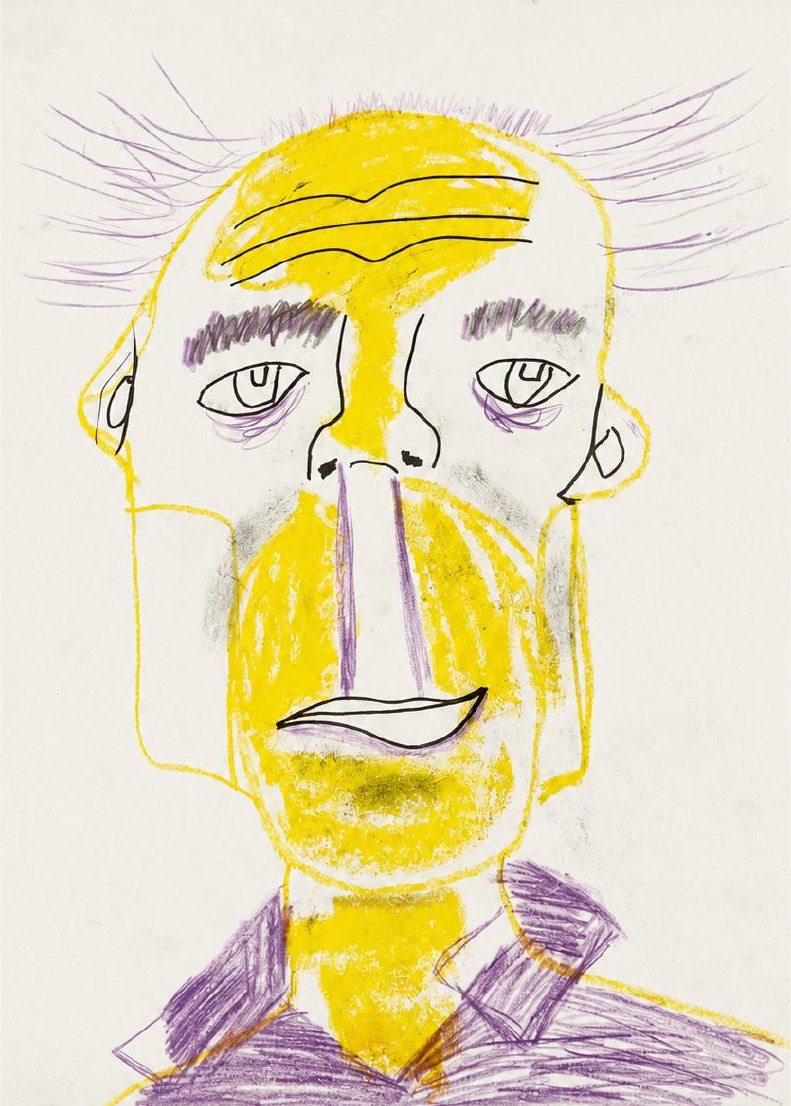
Artist statement
Figuration as a way of preserving the trace of human presence.
Vlada Vornovskikh works across painting and drawing, turning to figuration as a way of preserving the trace of human presence. Her practice unfolds between observation and recollection, where figures emerge from early impressions, family narratives, and incidental encounters. Formed at the intersection of the real and the imagined, her characters remain rooted in personal experience while gradually moving beyond it.
Memory occupies a central place in Vornovskikh's artistic world: the memory of home, of adolescence along the Volga, and of the people who shaped her perception of the world. Rather than forming a direct narrative, these motifs operate as an underlying structure that connects faces, gestures, intonations and fragments of the past. Snatches of conversation, distinctive features, postures and temperaments of those who once entered the artist's life and receded into time gradually coalesce into autonomous types, suspended between private history and collective recognition. Brought together, they evoke a family album discovered years later: the faces seem familiar, while the names have already been forgotten.
A free line, saturated colour and a deliberately simplified treatment of the figure allow Vornovskikh to foreground the emotional charge of the image. Her gaze retains a rare immediacy, grounded in attention to the everyday and a trust in intuition. In her depictions of people she avoids hierarchy and judgement, endowing her figures with gentle irony, warmth and inner freedom. They appear at once recognisable and elusive, specific and archetypal.
This approach to image-making also extends into the digital sphere. For Vornovskikh, social media is not merely a platform for presenting finished works, but another site of observation and artistic notation, where process, chance and play hold the same value as the completed piece.